
What it is
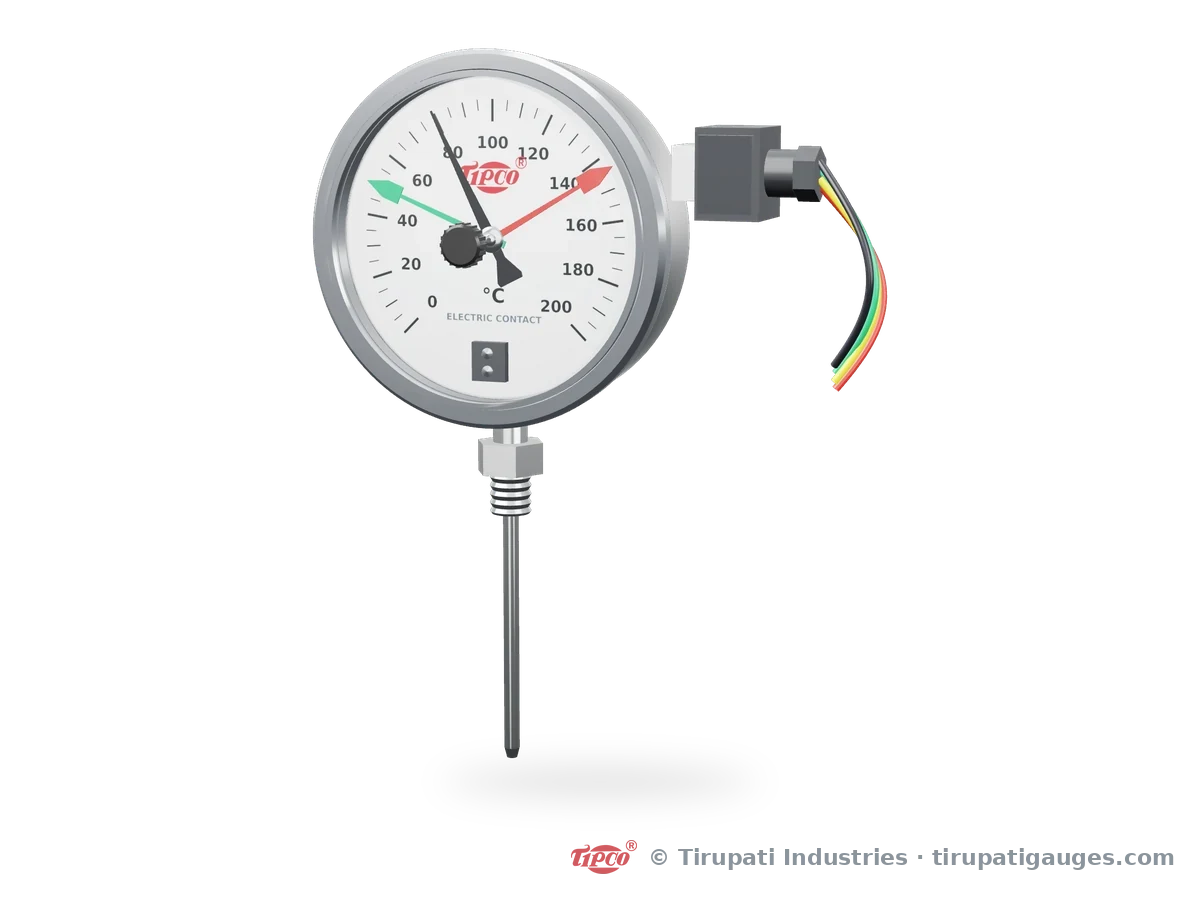
An electric contact temperature gauge gives a local reading and also switches an electrical circuit when the temperature reaches a set point. One or two set pointers can be adjusted across the scale.
Available with a direct stem or with a capillary for remote mounting.
How it works
The set pointers are adjusted from the front. When the main pointer reaches a set pointer, the contact opens or closes the circuit to raise an alarm or switch a heater, cooler or fan. Wiring is brought out through a terminal box and cable gland.
Where it is used
- High and low temperature alarms
- Heating and cooling control
- Transformers, motors and bearings
- Ovens, dryers and process tanks
- Cooling water and lube oil systems
Things to consider
- Tell us the number of set points and the switching action on rising temperature.
- Tell us the switching voltage and current.
- Choose a direct stem or a capillary, and a thermowell where needed.
What to tell us for a quote
- Temperature range
- Dial size and stem length (or capillary length)
- Connection and thread size
- Need for a thermowell
- The medium and its working pressure
- Quantity
Questions about electric contact temperature gauges
What can an electric contact thermometer switch?
An alarm, a relay, a heater, a cooler or a fan, within the contact's rating. Tell us the voltage and current so we can choose the right contact.
Not sure this is the right gauge?
Answer up to 5 quick questions and the Gauge Finder suggests the right one from our range.
Need electric contact temperature gauges?
Send us the range, medium and connection and we will quote.