
What it is
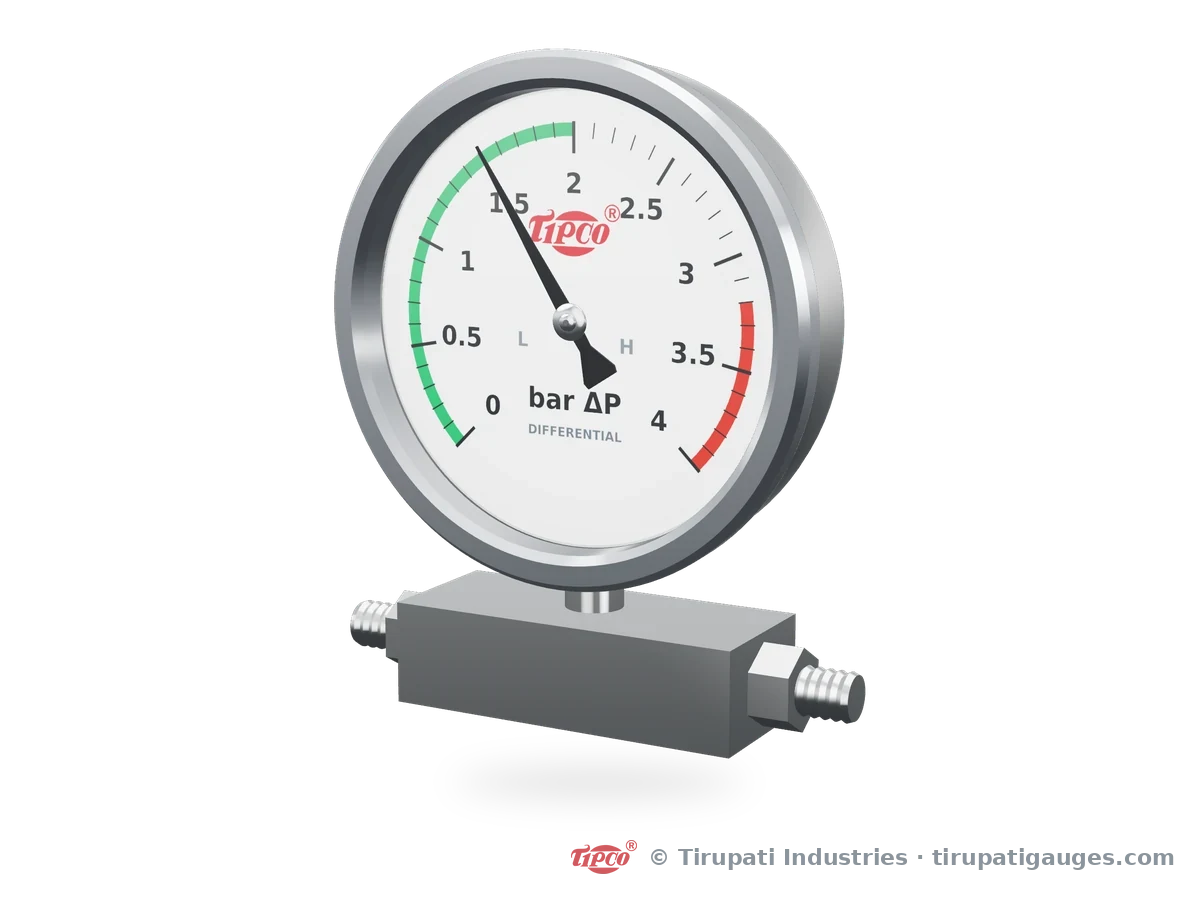
A differential pressure gauge, or DP gauge, has two connections: a high-pressure side and a low-pressure side. The dial shows the difference between them.
We supply low-range gauges for air and magnet-type gauges for higher ranges.
How it works
The two pressures act on opposite sides of a sensing element. Only the difference moves it, so the pointer shows the pressure drop. When the drop across a filter rises, the filter is blocking up and needs cleaning or changing.
Where it is used
- Filter and strainer monitoring
- Cleanrooms and HVAC air handling
- Pump and heat-exchanger performance
- Level measurement in closed tanks
Things to consider
- Connect the high and low ports to the correct sides.
- Choose a range that covers the clean and the blocked condition of the filter.
- A three-valve manifold makes it easy to isolate, vent and zero the gauge.
What to tell us for a quote
- Gauge type and dial size
- Pressure range and unit (bar, kg/cm², psi, kPa)
- Connection type and size
- Material of the wetted parts (for example SS 316, Hastelloy C, Monel 400 or Duplex)
- The medium and its working temperature
- Quantity and any special need
Questions about differential pressure gauges
How do I know when a filter needs changing?
Note the reading with a clean filter. When the differential reaches the limit set by the filter maker, the filter should be cleaned or replaced.
Not sure this is the right gauge?
Answer up to 5 quick questions and the Gauge Finder suggests the right one from our range.
Need differential pressure gauges?
Send us the range, medium and connection and we will quote.